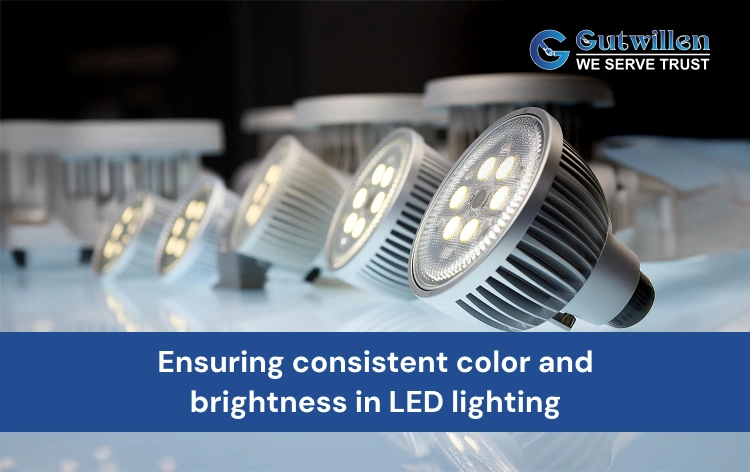
When businesses place large orders for lighting components, consistency becomes just as important as performance. Whether lights are used in equipment panels, dashboards, or industrial indicators, every unit must look and behave the same. Even a small difference in brightness or color tone can stand out when multiple lights appear side by side.
That is why companies that rely on a dependable LED Lighting manufacturer expect precise quality control across every production run. A single shipment may contain thousands of units, and each one must match the others in both color and brightness.
Achieving that level of uniformity requires more than just assembling parts. It involves careful sourcing, strict manufacturing procedures, and detailed testing at every stage of production. When these steps work together, large orders maintain the consistency that customers depend on.
Why consistency matters when choosing an LED lighting manufacturer
Lighting consistency plays an important role in both functionality and appearance. In products such as vehicle consoles, industrial control panels, or electronic equipment, indicator lights often sit next to each other. When one light appears brighter or slightly different in color, the difference becomes noticeable immediately.
Companies that work with console light suppliers often require exact color matching so that signals remain easy to recognize during operation. Uniform lighting also helps maintain the visual design of a product, which is important for many manufacturers.
For any reliable LED Lighting manufacturer, producing consistent results across large orders means maintaining strict standards throughout the production process. Every component and every step must contribute to the same predictable outcome.
How an LED lighting manufacturer controls color variation
The process of ensuring consistent lighting begins long before assembly starts. It begins with the selection of the LED components themselves.
Even LEDs produced in the same factory can show slight differences in brightness and color temperature. To manage this, manufacturers use a method known as binning. This process groups LEDs according to similar color and brightness characteristics.
By selecting components from the same bin range, manufacturers can significantly reduce visible differences in the final product. Experienced manufacturers also work closely with trusted LED bulb suppliers to ensure that incoming components meet strict quality standards.
Careful component selection provides the foundation for maintaining uniform lighting across large production runs.
Maintaining controlled manufacturing conditions
Once the right components are selected, consistent manufacturing conditions become essential. Even small variations in assembly can affect how a light performs.
Temperature levels, soldering accuracy, and component placement all influence the final output of a lighting product. Skilled technicians follow standardized procedures that help maintain identical assembly conditions for every unit.
Automation also helps improve consistency. Precision machinery can place components with a level of accuracy that reduces human variation. When manufacturing processes are carefully controlled, every unit produced follows the same specifications.
For companies that depend on reliable lighting solutions, these controlled processes help ensure that products perform consistently across entire orders.
Continuous testing throughout production
Testing is a critical part of maintaining lighting consistency. Rather than waiting until the end of production, manufacturers often test products at multiple stages during the process.
Specialized instruments measure both brightness and color temperature to confirm that each unit falls within the required range. These measurements help detect any variation early so adjustments can be made immediately.
If a unit does not meet the required specifications, it is removed from the batch for further inspection. This approach prevents inconsistent products from reaching customers.
Businesses working with console light suppliers rely on this level of quality control to ensure their equipment operates reliably and looks uniform.
Matching color and brightness across large batches
Large production orders are sometimes completed in multiple batches. Maintaining consistent lighting across these batches requires careful documentation and process control.
Manufacturers record detailed production data for each order, including the specific component batches used and the testing results for those units. When additional orders are placed later, these records help replicate the original specifications.
This process is especially valuable for customers who reorder the same product over time. By referencing previous production data, manufacturers can maintain consistent lighting characteristics even months or years later.
Consistency across batches is one of the qualities that distinguishes an experienced LED Lighting manufacturer.
Ensuring stable brightness levels
Color consistency is only one part of the equation. Brightness must also remain uniform across every unit in a large order.
Manufacturers measure the luminous output of each product to ensure it falls within the expected range. Electrical design also plays an important role in maintaining stable brightness levels.
Proper current regulation ensures that each LED receives consistent power. When electrical performance remains stable, brightness levels stay predictable as well.
Reliable LED bulb suppliers contribute to this process by providing components that meet consistent optical and electrical standards.
Careful packaging and handling
Even after manufacturing and testing are complete, proper handling remains important. Lighting components must be packaged carefully to protect them during transportation.
LED products can be sensitive to moisture, static electricity, and physical impact. Manufacturers often use protective packaging materials that reduce movement and shield components during shipping.
These precautions help ensure that products arrive at their destination in the same condition they left the factory.
Consistency that supports your product quality
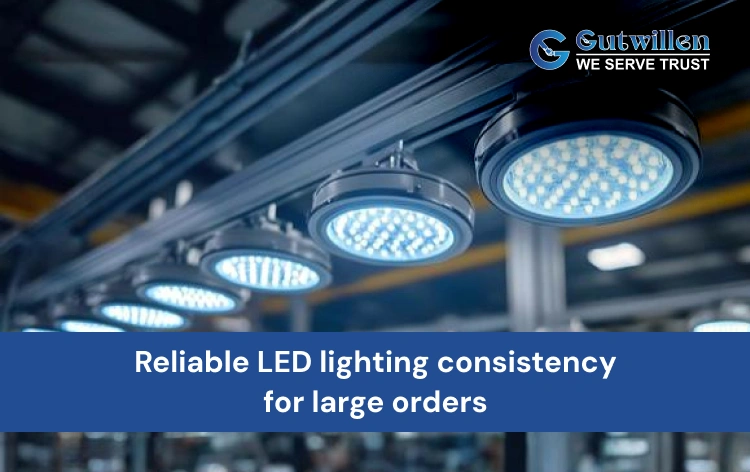
When businesses order lighting components in large quantities, they expect every unit to match in both appearance and performance. Maintaining consistent color and brightness is essential for equipment reliability, visual clarity, and overall product quality.
Achieving that consistency requires careful component selection, controlled manufacturing processes, accurate testing, and reliable supply partners.
At Gutwillen, we focus on delivering lighting solutions that maintain consistent color and brightness across large production orders. As a trusted LED Lighting manufacturer, we understand how important uniform lighting performance is for your products. Our team carefully manages component selection, manufacturing standards, and quality checks to ensure every unit meets the same performance expectations.
This attention to detail helps businesses rely on lighting components that look and perform consistently across their entire product line. If you are looking for dependable lighting solutions for your next project, contact us to learn how we can support your production needs.
FAQs
1. Why is color consistency important in LED lighting for large orders?
Color consistency is important because lighting components often appear together in the same product or panel. If even one light has a slightly different tone, the variation becomes noticeable and can affect the overall appearance of the product. For industries that rely on indicator lights or console displays, consistent color also improves visibility and user understanding. Maintaining uniform color across thousands of units helps ensure that the final product looks professional and performs as intended.
2. What causes variations in brightness or color in LED lights?
Small variations in brightness or color can occur during the manufacturing of LED chips themselves. Even when produced under the same conditions, LEDs can naturally differ slightly in output. This is why manufacturers sort LEDs into groups based on brightness and color characteristics before assembly. By using components that fall within the same range, manufacturers can significantly reduce visible differences between lighting units.
3. How do manufacturers maintain consistent lighting performance in large production runs?
Maintaining consistency requires careful control throughout the manufacturing process. This includes selecting components from the same quality range, following standardized assembly procedures, and maintaining controlled production environments. Regular testing during production also plays an important role. Specialized equipment measures brightness and color output to ensure that each unit meets the required specifications before it is approved.
4. Why is testing during production important for LED lighting quality?
Testing during production helps detect any variation early in the manufacturing process. Instead of waiting until all units are assembled, manufacturers test lighting output at multiple stages. This allows them to identify components or batches that fall outside the acceptable range and correct the issue immediately. Continuous testing helps maintain consistent lighting performance across the entire order.
5. Can lighting consistency be maintained across multiple production batches?
Yes, consistent lighting can be maintained across different production batches when manufacturers keep detailed production records. Information about component sources, color ranges, and testing results helps ensure that future orders follow the same specifications. By referencing previous production data, manufacturers can produce lighting units that match earlier batches, even when orders are placed months or years apart.