When people choose LED lighting for homes, offices, or commercial spaces, one question almost always comes up. How long will the lights actually last?
Unlike traditional bulbs that simply stop working when they fail, LED technology behaves a little differently. LEDs gradually become dimmer over time rather than burning out suddenly. Because of this, manufacturers measure longevity in a more technical way called LED lifespan ratings.
You may have come across terms like L70, L80, or L90 while comparing lighting products. These ratings help explain how well an LED maintains its brightness over time. Understanding what they mean can help you make better decisions when selecting lighting for long-term use.
What LED lifespan really means
In simple terms, LED lifespan refers to how long an LED light can operate before its brightness drops to a certain level. Instead of measuring failure like traditional bulbs, LEDs are evaluated based on lumen maintenance.
Lumens represent the amount of light produced by a fixture. Over time, the brightness slowly decreases as the LED components age. The lifespan rating indicates how long the light will maintain most of its original brightness before noticeable dimming occurs.
This method gives a more realistic picture of performance because the light may still work even after the rated lifespan. It simply may not be as bright as it was when it was new.
Why lumen maintenance matters
With conventional lighting, the bulb stops working when the filament burns out. LED lighting does not behave that way.
Instead, LEDs experience a gradual reduction in brightness due to heat, electrical stress, and normal material aging. Because of this, lighting professionals evaluate LEDs by measuring how much light output remains after thousands of hours of operation.
This is where L70, L80, and L90 ratings come into play. These numbers describe how well the light maintains its brightness during its operational life.
LED lifespan ratings: L70, L80, and L90 explained
Understanding these ratings is easier than it sounds. Each rating refers to the percentage of original brightness that remains after a certain number of operating hours.
L70 rating
The L70 rating is the most commonly used measurement in the lighting industry.
When an LED fixture reaches its L70 rating, it means the light is still producing 70 percent of its original brightness. In other words, the brightness has reduced by 30 percent compared to when it was new.
For many applications, L70 is considered the practical end of useful lighting performance. Even though the light still works, the drop in brightness becomes noticeable.
For example, if a light has an L70 rating of 50,000 hours, it means that after 50,000 hours of use the fixture will still deliver about 70 percent of its initial light output.
L80 rating
An L80 rating indicates stronger lumen maintenance.
At this stage, the light still produces 80 percent of its original brightness. The reduction in output is only 20 percent. This means the fixture maintains higher lighting quality for a longer period.
Lighting systems with L80 ratings are often used in environments where consistent brightness is important, such as offices, retail spaces, or architectural lighting.
L90 rating
The L90 rating represents very high performance.
A fixture that reaches its L90 lifespan still produces 90 percent of its original brightness. Only a small drop in output occurs over time.
These ratings are usually associated with premium lighting solutions designed for demanding environments where maintaining brightness is critical.
Factors that affect LED lifespan
While lifespan ratings provide useful guidance, several real-world factors influence how long LEDs perform at their best.
Heat management
Heat is one of the biggest enemies of LED performance. Poor thermal management can shorten the life of the electronic components inside the fixture.
Quality lighting products use proper heat sinks and materials to keep temperatures under control.
Driver quality
The LED driver regulates electrical current. If the driver is poorly designed, it can reduce the overall performance and longevity of the lighting system.
Operating conditions
Environmental conditions also play a role. High temperatures, humidity, and continuous operation can affect how quickly light output declines.
Reliable lighting systems are designed to handle these conditions while maintaining stable performance.
Why lifespan ratings matter for commercial lighting
For large installations such as parking lots, warehouses, or industrial facilities, maintenance costs can become significant.
This is why many project planners look closely at lifespan ratings when selecting lighting fixtures. Longer-lasting lights reduce replacement frequency, maintenance labor, and operational disruptions.
For example, large outdoor lighting installations often rely on products from experienced flood light suppliers to ensure consistent performance over long operating hours.
Similarly, specialized lighting systems used in industrial environments may come from trusted striker LED light suppliers, where durability and consistent brightness are essential.
In these applications, choosing lighting with strong lumen maintenance ratings helps maintain illumination quality over many years.
The role of reliable manufacturing
Behind every durable LED product is careful design and manufacturing. Quality components, proper thermal engineering, and rigorous testing all contribute to better performance.
A dependable LED Lighting manufacturer focuses on designing products that balance efficiency, brightness, stability, and longevity. When these factors are engineered correctly, the lighting system can maintain high performance throughout its lifespan.
Understanding lifespan ratings helps buyers look beyond simple wattage or brightness and evaluate how well a product will perform over time.
Lighting designed to last
Understanding LED lifespan ratings like L70, L80, and L90 helps simplify what might otherwise seem like complex technical information. These ratings give a clearer idea of how well a lighting fixture maintains brightness throughout years of operation.
Instead of focusing only on initial brightness, lifespan ratings help users choose lighting that continues to perform reliably in the long run.
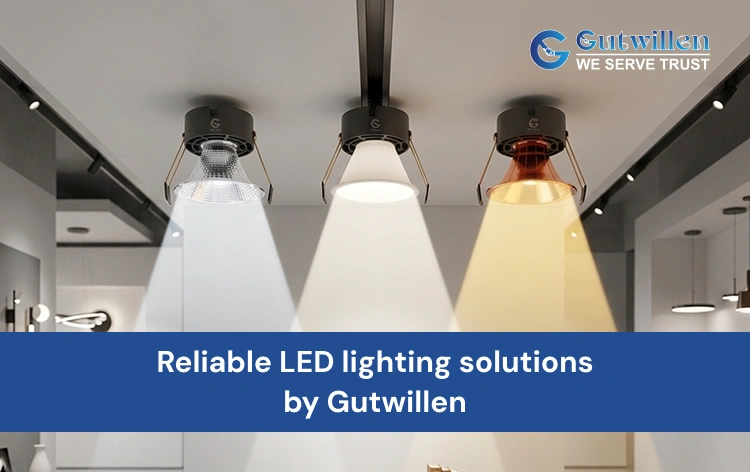
At Gutwillen, lighting solutions are designed with performance and durability in mind. From modern indoor fixtures to reliable commercial lighting systems, the goal is to deliver products that maintain strong illumination over time. If you are looking for dependable LED lighting solutions for your space, contact us today to learn how the right lighting can make a lasting difference.
FAQs
1. What does LED lifespan mean?
LED lifespan refers to the length of time an LED light can operate before its brightness drops to a certain level. Unlike traditional bulbs that suddenly stop working, LEDs gradually lose brightness over time. Lifespan is measured through lumen maintenance ratings such as L70, L80, or L90, which indicate how much of the original brightness remains after a specific number of operating hours. This approach gives a more realistic understanding of how long a light will perform effectively.
2. What is the difference between L70, L80, and L90 ratings?
L70, L80, and L90 ratings describe how much brightness an LED retains during its operational life. L70 means the light still produces 70 percent of its original brightness, while L80 indicates 80 percent brightness retention. L90 represents the highest performance, where the LED still maintains 90 percent of its initial light output. These ratings help users understand how well a lighting fixture maintains illumination over time.
3. Why do LEDs lose brightness instead of burning out?
LEDs are built differently from traditional bulbs. Instead of using a filament that burns out, LEDs use semiconductor components that gradually degrade due to heat, electrical stress, and normal aging. Over time, this causes the light output to decrease slowly. Even when brightness drops below the rated lifespan level, the light may still function, but it will not provide the same illumination as when it was new.
4. What factors can affect the lifespan of LED lighting?
Several factors influence how long LED lighting maintains its brightness. Heat management plays a major role because excessive heat can damage internal components. The quality of the LED driver, which regulates electrical current, also affects performance. Environmental conditions such as high temperatures, humidity, and long operating hours can further impact longevity. Proper design and manufacturing help minimize these effects and improve lifespan.
5. Why are LED lifespan ratings important when choosing lighting?
Lifespan ratings help buyers evaluate the long term performance of lighting fixtures. Instead of focusing only on brightness or wattage, these ratings show how well a light maintains its output over thousands of hours. This is especially important for commercial and industrial installations where replacing lights frequently can increase maintenance costs. Understanding lifespan ratings helps ensure the chosen lighting solution remains reliable and efficient for years.