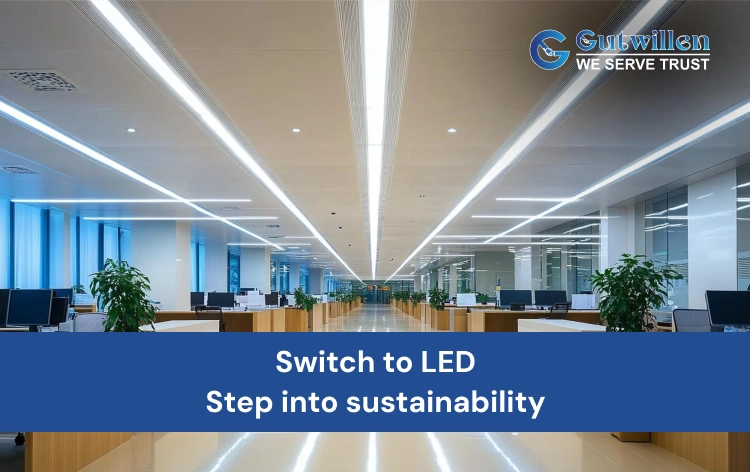
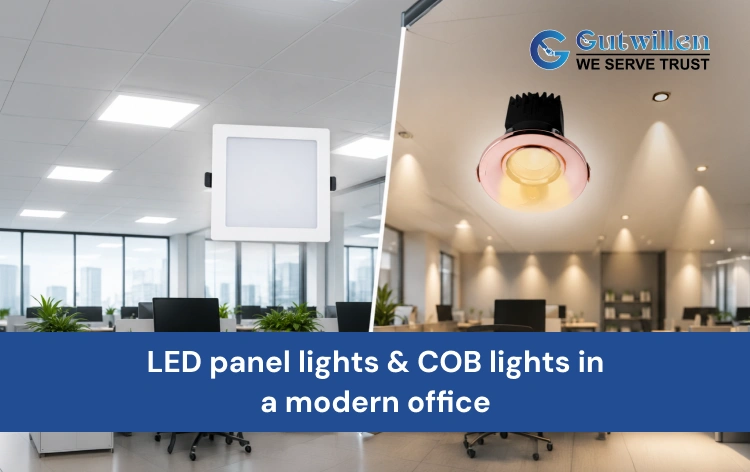
Choosing the right office lighting affects far more than aesthetics. It influences employee comfort, productivity, energy consumption, and even long-term maintenance costs. When comparing LED panel lights vs COB lights for offices, many businesses assume one technology is universally better. In reality, each serves a different purpose depending on the workspace, ceiling design, and lighting requirements.
Both LED panel lights and COB lights are widely used in commercial environments because they offer significant energy savings compared to conventional lighting. However, understanding their differences can help facility managers, architects, designers, and procurement teams make smarter purchasing decisions.
Understanding LED panel lights
LED panel lights are flat, slim lighting fixtures designed to provide broad, evenly distributed illumination. They are commonly installed in suspended ceilings and modern commercial interiors where uniform lighting is essential.
Unlike conventional fixtures that create bright spots and shadows, LED panel lights spread light across a large surface area, reducing glare and improving visual comfort.
Some of their key characteristics include:
- Uniform light distribution
- Wide beam angle
- Low glare
- Slim and modern appearance
- Excellent energy efficiency
- Long operational life
Because of these advantages, LED panel lights have become one of the most popular choices for offices, educational institutions, healthcare facilities, and conference rooms.
What are COB lights?
COB, or Chip-on-Board, technology places multiple LED chips closely together on a single circuit board. Instead of spreading light over a large area, COB lights produce a concentrated, high-intensity beam.
This focused illumination makes them ideal for highlighting specific spaces or objects rather than lighting an entire room.
Common applications include:
- Reception areas
- Meeting rooms
- Feature walls
- Display counters
- Retail environments
- Decorative ceiling lighting
COB lights also provide excellent color rendering, making interiors appear more vibrant and visually appealing.
LED panel lights vs COB lights for offices: Key differences
While both technologies use LEDs, their design philosophy is completely different.
| Feature | LED panel lights | COB lights |
| Light distribution | Wide and uniform | Focused and directional |
| Beam angle | Broad | Narrow |
| Glare | Low | Moderate if improperly positioned |
| Best application | General office lighting | Accent and task lighting |
| Ceiling compatibility | Grid and false ceilings | False ceilings and spot installations |
| Visual comfort | Excellent | Good for localized lighting |
| Maintenance | Low | Low |
| Energy efficiency | High | High |
Compare LED panel lights and COB lights across key features to determine the most suitable lighting solution for different office applications.
The biggest distinction lies in how the light is distributed. LED panel lights illuminate entire workspaces evenly, whereas COB lights create concentrated pools of light for specific tasks or visual emphasis.
LED panel lights vs COB lights for offices: Which option works best?
For most offices, LED panel lights are the better primary lighting solution because they provide consistent illumination across workstations. Uniform lighting reduces eye strain and creates a comfortable working environment for employees spending long hours at their desks.
COB lights, on the other hand, perform best when used as supplementary lighting. Their focused beam can highlight reception desks, conference tables, artwork, architectural details, or collaborative spaces without overwhelming the entire office.
Instead of viewing the two technologies as competitors, many modern office designs combine them to achieve both functionality and visual appeal.
Brightness and visual comfort
One of the most important considerations for office lighting is visual comfort rather than simply brightness.
LED panel lights distribute illumination evenly across the workspace, minimizing harsh contrasts and reducing shadows on desks, computer screens, and documents. This balanced lighting can contribute to a more comfortable working environment.
COB lights generate higher intensity within a smaller area. While this makes them excellent for spotlighting, relying solely on COB fixtures throughout an office may result in uneven illumination and noticeable bright spots.
For workspaces where employees use computers for extended periods, reducing glare is often more valuable than maximizing brightness.
Energy efficiency and operating costs
Both technologies are considerably more energy efficient than fluorescent or halogen lighting. However, overall efficiency depends on fixture quality, wattage, installation design, and operating hours.
LED panel lights typically deliver excellent efficiency while providing large-area coverage, reducing the number of fixtures required in open-plan offices.
COB lights are equally efficient within their intended application but are usually installed in greater numbers when attempting to illuminate larger spaces.
When planning commercial lighting, businesses should evaluate:
- Total energy consumption
- Required light levels
- Fixture spacing
- Maintenance frequency
- Expected lifespan
Selecting high-quality products from a reliable LED lighting manufacturer also plays an important role in maximizing performance and reducing replacement costs over time.
Where each lighting solution performs best
Choosing between these two lighting types becomes easier when you consider the intended application.
| Office Area | Recommended Lighting |
| Open-plan workstations | LED panel lights |
| Conference rooms | LED panel lights with COB accent lighting |
| Reception areas | COB lights with panel lighting |
| Executive cabins | Combination of both |
| Corridors | LED panel lights |
| Breakout spaces | COB lights for decorative effect |
Different office spaces benefit from different lighting solutions based on their function, layout, and illumination requirements.
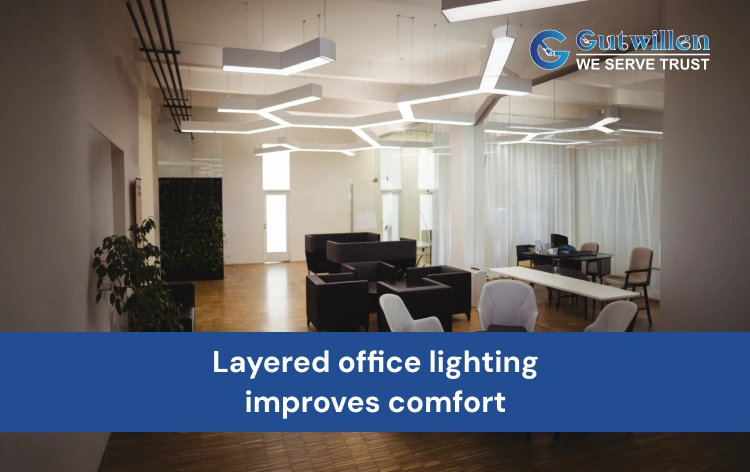
This layered approach allows offices to balance functionality with aesthetics while maintaining comfortable lighting throughout the workplace.
Choosing the right colour temperature
Colour temperature significantly influences workplace comfort and productivity.
For most office environments, lighting between 4000K and 5000K provides a bright, neutral white appearance that is well suited to everyday workspaces and visual comfort.
General recommendations include:
| Office Area | Recommended Colour Temperature |
| Workstations | 4000K to 5000K |
| Meeting rooms | 4000K |
| Reception | 3000K to 4000K |
| Collaborative spaces | 4000K |
| Executive offices | 3500K to 4000K |
Selecting the right colour temperature helps create comfortable, productive, and visually balanced office environments.
Selecting the appropriate colour temperature is just as important as choosing the fixture type, as it directly affects visual comfort and the overall workplace atmosphere.
Common mistakes to avoid when selecting office lighting
Choosing between LED panel lights and COB lights is only part of the decision. Many businesses overlook factors that affect long-term performance and employee comfort.
Here are some common mistakes to avoid:
- Using only COB lights for large office areas: Their focused beam can create uneven lighting and shadows, making workspaces less comfortable.
- Ignoring lux level requirements: Office spaces generally require 300 to 500 lux for comfortable working conditions. Lighting that is too dim or too bright can reduce visual comfort.
- Choosing fixtures based only on price: Low-cost lighting may have lower efficiency, inconsistent brightness, or shorter lifespans, resulting in higher replacement and maintenance costs.
- Overlooking colour rendering: A higher Color Rendering Index (CRI) helps documents, presentations, and interiors appear more natural, which is particularly important in professional environments.
- Not planning for future expansion: Modular lighting solutions make it easier to modify office layouts without replacing the entire lighting system.
How to choose between LED panel lights and COB lights for your office
If you’re still deciding, use these practical considerations to determine the best fit for your workspace.
Choose LED panel lights if you need:
- Uniform illumination across large office spaces
- Comfortable lighting for computer-based work
- Low-glare lighting for employees
- Energy-efficient lighting for everyday operations
- Modern, clean ceiling aesthetics
Choose COB lights if you need:
- Accent lighting for reception or display areas
- Focused illumination for meeting tables or artwork
- Decorative ceiling lighting
- Highlighting architectural features
- Layered lighting alongside panel lights
For many modern offices, the best solution isn’t choosing one over the other. Combining both technologies creates a balanced lighting design that improves functionality while enhancing the overall appearance of the workplace.
Final verdict
When comparing LED panel lights vs COB lights for offices, there isn’t a one-size-fits-all answer.
For general office illumination, LED panel lights remain the preferred choice because they provide uniform brightness, reduce glare, and create a comfortable working environment. COB lights are better suited for accent lighting, task-specific areas, and enhancing the visual appeal of commercial interiors.
The most effective office lighting plans often integrate both technologies, using panel lights for everyday illumination and COB lights to highlight key spaces where focused lighting is needed.
If you’re planning a new office, renovating an existing workspace, or evaluating commercial lighting options, the right solution depends on your office layout, lighting objectives, and budget. Gutwillen can help you determine whether LED panel lights vs COB lights for offices is the right choice for your specific project and recommend lighting solutions that deliver long-term performance and efficiency.
FAQs
1. Which is more energy efficient: LED panel lights or COB lights?
Both lighting technologies are highly energy efficient. However, LED panel lights are generally more suitable for illuminating large office areas because they provide wider coverage with fewer fixtures, while COB lights excel in focused lighting applications.
2. Can LED panel lights and COB lights be installed together in the same office?
Yes. Many commercial offices use a layered lighting approach by installing LED panel lights for general illumination and COB lights for accent or task lighting. This combination improves both functionality and visual appeal.
3. LED panel lights vs COB lights for offices: Which option requires less maintenance?
Both have long operating lifespans and require minimal maintenance when sourced from a reputable LED lighting manufacturer. Proper installation and quality components further reduce maintenance requirements over time.
4. What colour temperature is recommended for office lighting?
For most office environments, neutral white lighting is generally preferred because it provides clear, comfortable illumination for everyday tasks. The ideal colour temperature depends on the nature of the workspace, employee comfort, and the desired ambience.
5. Are COB lights suitable for open-plan offices?
COB lights can be used in open-plan offices, but they are best suited as supplementary lighting rather than the primary source of illumination. Their focused beam works well for highlighting specific areas but may not provide the even lighting required across an entire workspace.
6. How do I choose a reliable LED lighting manufacturer?
Look for a manufacturer that offers certified products, consistent lighting performance, strong thermal management, reliable warranties, and solutions tailored to commercial applications. Product quality and after-sales support are equally important when making a long-term investment.